
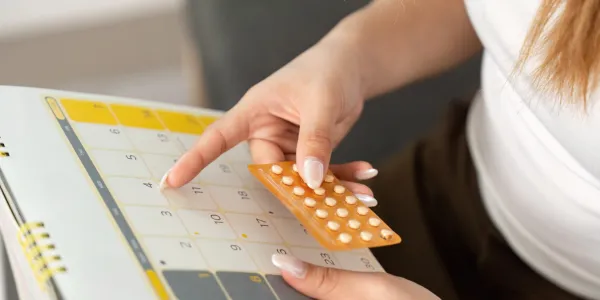
You mark the date on your calendar, wait, and nothing happens. Or your period arrives twice in one month and then disappears for two. If this sounds familiar, you are not alone. Irregular menstruation is one of the most common reasons women visit a gynaecologist or endocrinologist, and it often leads to one question: “Is there a tablet that can fix this?”
Many women hear about a 21 days tablet for irregular periods from a friend, a pharmacist, or an online forum. These tablets can help, but only when they are chosen for the right reason and taken the right way. In this guide, the team at Indus Health explains what these tablets are, how they work, who they suit, and the precautions you should never skip.
What counts as irregular menstruation?
A typical menstrual cycle lasts anywhere from 21 to 35 days, with bleeding for 2 to 7 days. Your cycle is considered irregular when:
- The gap between periods is shorter than 21 days or longer than 35 days
- Your cycle length changes by more than 7 to 9 days from month to month
- You miss three or more periods in a row without being pregnant
- Periods become very heavy, very light, or last longer than a week
- You notice spotting between periods or after intercourse
An occasional late period after travel, illness or exam stress is usually nothing to worry about. A pattern that keeps repeating, however, is your body asking for attention.
What Exactly Is a 21 Days Tablet for Irregular Periods?
When doctors talk about a 21 days tablet for irregular periods, they usually mean a combined oral contraceptive pill (COC) that comes in a 21-tablet strip. Each tablet contains two synthetic hormones: an oestrogen (most often ethinyl estradiol) and a progestin (such as levonorgestrel, desogestrel or drospirenone).
You take one tablet a day for 21 days, then stop for 7 days. During this tablet-free week, a “withdrawal bleed” occurs, which looks and feels like a period. Because you control when the strip starts and stops, your bleeding begins to follow a predictable 28-day rhythm.
How does it bring order to your cycle?
In an irregular cycle, your own hormones rise and fall unevenly. Sometimes the ovary does not release an egg at all, so the uterine lining keeps building up and sheds unpredictably. The 21-day pill works by:
- Pausing ovulation – the hormones signal the brain to slow down the release of FSH and LH, so the ovaries rest.
- Stabilising the uterine lining – the lining stays thin and even, which often means lighter, less painful bleeding.
- Creating a fixed rhythm – the 21-on, 7-off pattern sets a clear schedule your body follows every month.
- Lowering androgen levels – some formulations reduce male-type hormones, which helps with acne and unwanted hair in PCOS.
It is important to understand one thing clearly: the pill regulates the cycle while you take it. It does not cure the underlying cause. That is why a proper diagnosis comes first, and why lasting irregular periods treatment focuses on the root problem, not just the bleeding pattern.
Is it the same as a period-delay tablet?
No. Period-delay or period-inducing tablets usually contain only a progestin (for example, norethisterone or medroxyprogesterone) and are taken for a short course of 5 to 10 days. A 21-day combined pill is a longer-term, monthly regimen. Mixing these up is one of the most common mistakes women make when self-medicating.
The Hidden Culprits: Common Causes of Irregular Periods
Before any tablet is prescribed, your doctor needs to know why your cycle has gone off track. The most common causes of irregular periods include:
- Polycystic ovary syndrome (PCOS/PCOD) – the leading hormonal cause of irregular cycles in women of reproductive age
- Thyroid disorders – both an underactive and an overactive thyroid can delay, lighten or stop periods
- High prolactin levels – often linked to a small, benign pituitary growth or certain medicines
- Chronic stress and poor sleep – cortisol directly disturbs the brain signals that control ovulation
- Sudden weight gain or weight loss – including crash diets and over-exercising
- Insulin resistance and diabetes – high insulin pushes the ovaries to make more androgens
- Perimenopause – cycles naturally become erratic in the years before menopause
- Structural problems – fibroids, polyps or endometriosis can cause heavy or unpredictable bleeding
Because so many of these are hormonal, a specialist in endocrinology is often the right person to evaluate you. If you live in or around Delhi NCR, you can explore Hormonal Imbalance Treatment in East Delhi at Indus Health, where hormone testing and treatment are planned under one roof.
Could It Be PCOS? Signs You Should Not Ignore
PCOS deserves special mention because it is the single biggest reason behind long, unpredictable cycles. Many women live with it for years without a diagnosis because the early signs seem unrelated.
So, What Are the First Signs of PCOS? Look out for:
- Periods that come every 35 days or longer, or fewer than eight periods a year
- Acne along the jawline, chin and upper neck that does not respond to usual creams
- Excess hair growth on the face, chest or abdomen (hirsutism)
- Weight gain, especially around the waist, that is hard to lose
- Thinning scalp hair or a widening hair parting
- Dark, velvety skin patches on the neck, underarms or groin (acanthosis nigricans)
You can read a detailed breakdown of Symptoms of PCOD Problem in Females on our website. If you notice two or more of these alongside irregular periods, it is worth getting a hormone profile and pelvic ultrasound done.
For women with PCOS, the 21-day combined pill is one of the most commonly prescribed first-line options when pregnancy is not currently planned. It regulates bleeding, protects the uterine lining from overgrowth, and can improve acne and hair growth over a few months.
More Than Birth Control: Key Uses and Benefits
A 21-day combined pill is often thought of only as a contraceptive, but doctors prescribe it for several menstrual and hormonal concerns:
- Regulating irregular cycles so periods arrive on a predictable day
- Reducing heavy menstrual bleeding and the iron-deficiency anaemia that comes with it
- Easing painful periods (dysmenorrhoea) by keeping the uterine lining thin
- Managing PCOS symptoms such as acne, oily skin and excess facial hair
- Protecting the endometrium in women who rarely ovulate, lowering the risk of abnormal thickening
- Reducing PMS mood swings and bloating with certain formulations
- Reliable contraception when taken correctly
Most women notice a more regular bleeding pattern within the first two to three strips. Skin and hair improvements take longer, usually three to six months.
Getting the Dose Right: How the 21-Day Strip Is Taken
The exact tablet, strength and start date must be decided by your doctor. The table below explains the general pattern so you know what to expect.
| Aspect | What usually happens |
|---|---|
| Tablets per strip | 21 active hormone tablets |
| Daily dose | One tablet every day at the same time |
| When to start | Day 1 of your period, or as directed by your doctor (a pregnancy test may be advised first if periods are absent) |
| Tablet-free break | 7 days after finishing the strip |
| Withdrawal bleed | Usually starts 2–4 days into the break |
| Next strip | Day 8, whether or not bleeding has stopped |
| Time to regular pattern | Typically 2–3 cycles |
| Usual duration of use | 3–6 months, then review; longer if the doctor advises |
| Missed one tablet (under 24 hours late) | Take it as soon as you remember and continue the strip |
| Missed two or more tablets | Follow the leaflet and call your doctor; backup contraception may be needed |
Tips for taking it correctly
- Set a daily phone reminder; consistency matters more than the time you choose.
- Take it after a meal or at bedtime if you feel nauseous.
- Vomiting within 3 hours or severe diarrhoea can reduce absorption, so tell your doctor.
- Always mention other medicines you take, as some antibiotics for TB, anti-seizure drugs and herbal products like St John’s wort can make the pill less effective.
Read This Before You Start: Precautions and Side Effects
The 21-day pill is safe for most healthy women, but it is a prescription hormone and is not suitable for everyone. Doctors usually avoid combined pills if you:
- Are over 35 and smoke
- Have a personal or family history of blood clots (DVT or pulmonary embolism)
- Get migraines with aura
- Have uncontrolled high blood pressure, heart disease or a history of stroke
- Have active liver disease or a liver tumour
- Have or have had breast cancer
- Are breastfeeding a baby under six months, or have unexplained vaginal bleeding
Common side effects
Mild side effects usually settle within the first two to three months: nausea, breast tenderness, headache, spotting between periods, bloating and mild mood changes.
Warning signs that need urgent care
Stop the tablet and seek medical help right away if you have severe calf pain or swelling, sudden chest pain or breathlessness, a sudden severe headache, vision changes, or weakness on one side of the body. These are rare but can signal a clot.
This is exactly why Dr. Niti Agarwal advises against picking up a strip over the counter on someone else’s recommendation. A short consultation, a blood pressure check and a few questions about your history make the treatment far safer.
The Truth About Tablets to Get Periods Immediately
Searches for tablets to get periods immediately are extremely common, especially before weddings, exams or travel. Here is the honest answer: no tablet brings on a period instantly.
What doctors can do is prescribe a short course of a progestin tablet for 5 to 10 days. When you stop it, the drop in hormone levels triggers a withdrawal bleed, usually within 3 to 10 days. This is useful for women who have not had a period for a few months, but it comes with two firm rules:
- Pregnancy must be ruled out first. A missed period is the most common early sign of pregnancy, so a urine or blood test always comes before any period-inducing tablet.
- The cause still needs to be found. Inducing one bleed does not correct PCOS, thyroid disease or high prolactin. If you need these tablets repeatedly, you need a full evaluation.
How Much Blood Is Lost During a Period, and When Is It Too Much?
Many women are unsure what is normal when it comes to period bleeding. So, how much blood is lost during a period? On average, a woman loses about 30 to 40 ml of blood over the entire period, which is roughly two to three tablespoons. Losing more than 80 ml per cycle is considered heavy menstrual bleeding.
Since nobody measures in millilitres, these practical signs help you judge:
- You soak through a pad or tampon every one to two hours for several hours in a row
- You need to change protection during the night or use double protection
- You pass clots larger than a one-rupee coin
- Your period lasts longer than seven days
- You feel tired, breathless or dizzy, which may point to anaemia
Irregular cycles and heavy bleeding often go together. When ovulation is skipped, the lining builds up for longer and then sheds all at once. The 21-day combined pill can reduce this loss significantly, but heavy bleeding should always be checked for fibroids, polyps or thyroid problems first.
When to See a Specialist (And Why It Matters)
Book an appointment if your periods have been irregular for more than three months, if you have gone 90 days without a period, if bleeding is heavy enough to affect daily life, or if you notice signs of PCOS, thyroid trouble or sudden weight change. Bleeding after menopause always needs prompt evaluation.
At Indus Health, Dr. Niti Agarwal, a consultant endocrinologist in East Delhi, takes a root-cause approach to irregular periods. A typical evaluation may include a thyroid profile, prolactin, LH and FSH, testosterone, fasting insulin or HbA1c, and a pelvic ultrasound. Based on these results, treatment is tailored to you. For some women, that means a 21-day pill. For others, it means thyroid medication, insulin-sensitising therapy, or a structured diet and exercise plan.
You can find and visit Indus Health to book a consultation.
Frequently Asked Questions
1. Can I take a 21 days tablet for irregular periods without a prescription?
It is not advisable. These are hormone tablets with real contraindications, such as clotting risk and migraine with aura. A doctor should check your history and blood pressure, and rule out pregnancy, before you start.
2. Will my periods stay regular after I stop the tablet?
Not always. The pill controls the cycle while you take it. If the underlying cause, such as PCOS or a thyroid problem, is not treated, irregularity may return once you stop.
3. Can I get pregnant with PCOS?
Yes. Many women with PCOS conceive, either naturally or with help such as ovulation-inducing medicines and lifestyle changes. Even a 5 to 10% weight loss can restore ovulation in some women. Learn more in our guide: Can I Get Pregnant With PCOS.
4. Does the 21-day pill affect future fertility?
No. Fertility usually returns within one to three months of stopping. If you are planning a pregnancy, tell your doctor so the pill can be stopped and fertility-focused treatment started.
5. How long does it take for the tablet to regulate periods?
Most women see a predictable pattern within two to three cycles. Benefits for acne and excess hair take three to six months.
6. Is spotting normal in the first month?
Yes. Light breakthrough bleeding is common in the first few strips and usually settles. If it continues beyond three months or becomes heavy, consult your doctor.
7. Will the 21-day tablet make me gain weight?
Large studies have not shown significant weight gain with modern low-dose pills. Some women notice mild water retention early on, which usually settles.
8. What is the best irregular periods treatment?
There is no single best option. The right treatment depends on the cause. It may include hormonal tablets, thyroid or prolactin management, insulin-sensitising medicines, or diet, exercise and stress control.
The Bottom Line: Regular Cycles Start With the Right Diagnosis
A 21 days tablet for irregular periods can be a safe and effective way to bring back a predictable cycle, lighten heavy bleeding and ease PCOS symptoms. But it works best as part of a plan, not as a quick fix. Knowing the cause of your irregular menstruation, whether hormonal, structural or lifestyle-related, is what turns short-term control into long-term health.
If your cycle has been unpredictable for months, do not keep guessing. Speak with Dr. Niti Agarwal at Indus Health for a thorough hormonal evaluation and a treatment plan built around you.



Pingback: White Discharge Before Period: Causes & When to Worry