
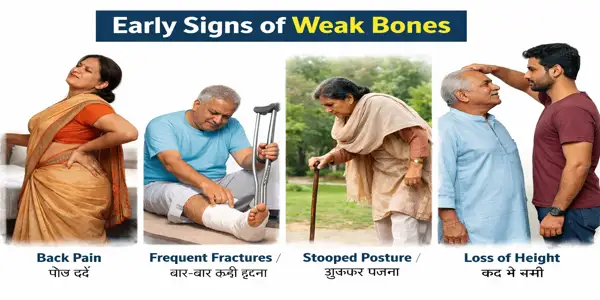
Bone health is something most people ignore until pain or fractures start affecting daily life. The problem is that weak bones develop silently over time, and by the time symptoms become severe, the condition may already be advanced like osteoporosis.
That’s why understanding the early signs of weak bones is extremely important. If you notice symptoms early and consult a specialist like Dr. Niti Agarwal at Indus Health, East Delhi, you can prevent long-term damage and protect your mobility.
Table of Contents
ToggleWhat Are Weak Bones?
Weak bones mean your bone density is decreasing, making bones fragile and more likely to break even with minor falls or pressure.
Healthy bones are strong and dense, but when calcium, Vitamin D, or bone-supporting nutrients are reduced, bones slowly become weak.
If not treated early, this condition can progress into osteoporosis, which is a serious bone disease requiring medical treatment.
Why Do Bones Become Weak?
There are several common reasons why bone strength reduces over time:
Main Causes:
- Natural aging process
- Lack of calcium and Vitamin D
- No physical activity or sedentary lifestyle
- Hormonal changes (especially in women after menopause)
- Smoking and alcohol habits
- Long-term illness or medication use
These factors gradually reduce bone strength without noticeable symptoms in early stages.
Early Signs of Weak Bones You Should Not Ignore
Your body gives small warning signals before the condition becomes serious. Recognizing them early is very important.
Common Early Symptoms:
- Frequent bone or joint pain
- Back pain without heavy physical work
- Fractures from small injuries or falls
- Loss of height over time
- Weak grip strength
- Stiffness in joints, especially in the morning
- Brittle nails or weak teeth
If these signs appear, you should not ignore them and consider a bone health expert consultation in East Delhi.
When Should You Visit a Bone Specialist?
You should visit a doctor if:
- Pain is continuous or increasing
- You are getting fractures easily
- You have a family history of osteoporosis
- You feel weakness in bones or joints
- Your posture is changing (stooping or bending forward)
Early consultation at a bone care clinic in East Delhi helps in preventing serious conditions like osteoporosis.
Data Table: Early Signs of Weak Bones & What They Mean
| Symptom | What It May Indicate | Risk Level | What You Should Do |
| Mild joint stiffness | Early bone stress | Low | Improve diet + monitor |
| Back pain frequently | Bone density loss | Moderate | Consult bone specialist |
| Fractures from minor falls | Weak bones / osteoporosis risk | High | Immediate medical check |
| Height loss over time | Spine weakening | High | Bone density test required |
| Weak grip strength | Mineral deficiency | Moderate | Nutrition + consultation |
| Brittle nails & teeth issues | Calcium/Vitamin D deficiency | Low–Moderate | Diet correction + supplements |
How to Improve Bone Health Naturally
Bone health is not something that improves overnight—it is built slowly through your daily habits. The good news is that in most cases, you don’t always need heavy medicines in the beginning. With the right lifestyle choices, you can slow down bone loss, strengthen bones, and reduce the risk of osteoporosis naturally.
Your bones need continuous support from nutrition, movement, and healthy habits. If these are maintained properly, they stay strong and flexible for a longer time.
Simple Natural Tips to Improve Bone Health
1. Eat Calcium-Rich Foods Every Day
Calcium is the main building block of your bones. If your body does not get enough calcium from food, it starts taking it from your bones, making them weak over time.
Include foods like milk, curd, paneer, leafy green vegetables, almonds, and seeds in your daily diet. Consistency is more important than quantity—small daily intake works better than occasional heavy intake.
2. Get Regular Sunlight (Vitamin D Support)
Vitamin D helps your body absorb calcium properly. Without enough Vitamin D, even a calcium-rich diet will not fully strengthen your bones.
Try to get 15–20 minutes of morning sunlight daily, preferably before harsh midday sun. This simple habit naturally supports bone strength and immunity.
3. Stay Physically Active
Bones become stronger when they are used regularly. Lack of movement leads to faster bone weakness.
Simple activities like walking, light jogging, yoga, or basic strength exercises help improve bone density and joint flexibility. You don’t need intense workouts—even consistent moderate activity makes a big difference.
4. Avoid Smoking and Alcohol
Smoking reduces blood supply to bones and slows down bone formation. Alcohol affects calcium balance and weakens bone structure over time.
Avoiding these habits is one of the most important steps in protecting long-term bone health.
5. Maintain a Healthy Body Weight
Being underweight or overweight both can negatively affect bone health. Low body weight may lead to weak bones, while excess weight puts extra pressure on joints.
A balanced body weight helps maintain proper bone strength and reduces joint stress, especially in knees and hips.
Why These Habits Matter
These simple lifestyle habits may look small, but together they create a strong foundation for your bones. They help in:
- Slowing down natural bone loss
- Improving bone density
- Reducing joint pain and stiffness
- Preventing early osteoporosis
- Supporting long-term mobility
Best Foods for Strong Bones
Food plays a very important role in bone health.
Bone-Strengthening Foods:
- Milk, curd, paneer
- Green leafy vegetables (spinach, kale)
- Almonds and seeds
- Eggs
- Fish rich in omega-3
- Fortified cereals
A proper diet helps in prevention of osteoporosis and keeps bones stronger for longer.
Exercises for Strong Bones and Joints
Movement keeps bones active and strong.
Recommended Exercises:
- Walking or brisk walking
- Light weight training
- Yoga for flexibility
- Stretching exercises
- Balance training
These exercises improve bone density and are essential for strong bones and joints.
Bone Health Treatment in East Delhi – Indus Health
At Indus Health, bone problems are treated with a proper medical approach instead of just symptom relief.
Under the care of Dr. Niti Agarwal, patients receive personalized treatment based on their bone condition.
Services Available:
- Bone density testing (DEXA scan)
- Osteoporosis evaluation and treatment
- Joint pain management
- Vitamin and nutrition planning
- Long-term bone care guidance
If you are searching for bone health treatment in East Delhi or a trusted bone care clinic in East Delhi, early diagnosis is the most important step.
Prevention of Osteoporosis Tips
Prevention is always better than treatment.
Important Tips:
- Take enough calcium and Vitamin D
- Stay physically active
- Avoid smoking and alcohol
- Maintain proper posture
- Get regular bone checkups
These steps significantly reduce the risk of bone diseases.
Frequently Asked Questions
Q1. What are the first signs of weak bones?
Frequent pain, fractures, and loss of strength are early signs.
Q2. Can weak bones be improved naturally?
Yes, with proper diet, exercise, and medical guidance.
Q3. Who is most at risk?
Older adults, women after menopause, and people with poor nutrition.
Q4. When should I see a doctor?
When pain or fractures happen frequently or without major injury.
Q5. Is exercise helpful for weak bones?
Yes, regular exercise strengthens bones and joints.
Conclusion
Weak bones are not something that happens suddenly—they develop slowly and silently. If you notice early signs like pain, fractures, or weakness, don’t ignore them.
With timely care, proper nutrition, and lifestyle changes, bone health can be improved significantly.
For expert guidance, visit Indus Health, East Delhi. Dr. Niti Agarwal provides advanced diagnosis and personalized treatment for bone-related problems. Don’t wait for bone pain to get worse. Book your