

Sleep apnea isn’t just about loud snoring that keeps others awake. This condition poses serious health risks by creating a harmful cycle that harms the heart and raises blood pressure. It increases the chances of heart disease too. Dr. Varun Gupta, an experienced sleep specialist from Delhi with 18 years of work at Indus Hospital, has seen how untreated sleep apnea can harm both the heart and blood vessels over time.
When someone stops and starts breathing during sleep, it creates a series of physical changes in the body that put a lot of stress on the heart and blood vessels. Each pause in breathing sets off an emergency reaction, which raises blood pressure and makes the heart work overtime all night. Knowing how sleep apnea affects the heart is key to avoiding serious health issues and living a better life overall.
Understanding Sleep Apnea Heart Health Connection
Sleep apnea and heart health connect through multiple processes that together create serious risks for the heart. During these pauses in breathing, oxygen drops in the blood while carbon dioxide increases. This shift sets off the body’s fight-or-flight system, which speeds up the heart rate and raises blood pressure .
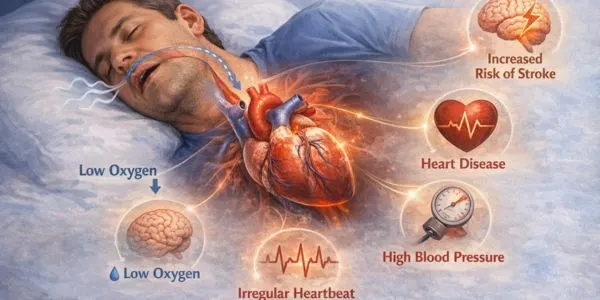
Studies show that 40-80% of people with heart problems also deal with obstructive sleep apnea known as OSA. These numbers are concerning. Each 10-unit rise in the Apnea-Hypopnea Index, which measures sleep apnea severity, has a 17% rise in heart disease risk. Dr. Varun Gupta shared that many individuals come to Indus Hospital to figure out why they snore to find out the bigger health risks involved.
Sleep apnea puts constant stress on the heart and blood vessels. It isn’t like short-term stress that fades away . Instead, sleep apnea keeps the cardiovascular system under pressure every single night over many years. This ongoing strain changes the heart’s structure leading to issues like a thickened left ventricle and stiffened arteries.
Common Sleep Apnea Heart Problems and Their Impact
Heart issues from sleep apnea show up in several ways creating specific difficulties for both patients and doctors. High blood pressure clogged arteries, heart failure, and irregular heartbeats are some of the most common problems. These conditions appear over time, so it is important to catch and address them to avoid lasting harm.
High blood pressure impacts about half of all people with sleep apnea and does not respond well to usual blood pressure drugs. When apneic events happen, they cause repeated low oxygen levels. This makes blood vessels tighten and leads to the release of stress hormones such as adrenaline and cortisol. These hormones raise blood pressure and also play a role in causing long-term changes to the heart and blood vessels over time.
Heart failure stands out as another major issue, with people who have sleep apnea facing a much higher chance of ending up with both systolic and diastolic heart failure. The heart struggles more because of the extra demands placed on it paired with the ongoing damage caused by low oxygen levels and inflammation. Over time, these factors reduce how well the heart pumps blood through the body. Common signs in patients include trouble breathing, feeling worn out, and swelling in the legs or ankles.
Heart rhythm problems, like atrial fibrillation and ventricular arrhythmias, appear more often in people with sleep apnea. A mix of low oxygen heightened activity in the sympathetic nervous system, and physical changes to the heart creates conditions that make irregular heartbeats more likely. These rhythm problems can turn deadly and raise the chance of strokes or sudden cardiac arrests.
Sleep Apnea and Heart Attack Risk: What You Need to Know
Studies reveal that sleep apnea can double the chance of cardiovascular problems. This link raises serious concerns about the dangers it presents. Several processes work together to create conditions that make coronary artery disease more likely and more severe.

When someone experiences apneic episodes, oxygen levels in the body drop . This drop causes the body to release stress hormones and inflammatory markers. These substances harm the inside of blood vessels leading to a buildup of plaques. These plaques might break apart and trigger a heart attack. Also, the sudden spikes in blood pressure and heart rate during these breathing pauses put extra pressure on the heart worsening existing heart disease.
Heart attacks in people with sleep apnea happen at different times compared to most people. Heart attacks are more common in the morning because of the body’s natural rhythms. But in those with sleep apnea, the chances of having heart problems go up at night and in the early morning. This happens because their heart faces constant strain all night due to repeated interruptions in breathing.
A snoring problem doctor can identify early warning signs and take timely steps to help prevent serious health complications. Dr. Varun Gupta explains that many patients visit a snoring problem doctor for snoring concerns without realizing that untreated snoring can also impact heart health.
Treatment Options and Expert Care
Delhi NCR provides top-tier care to people with sleep apnea. Indus Hospital offers advanced diagnostic and treatment options led by Dr. Varun Gupta known as one of the Best ENT specialists in East Delhi. A detailed evaluation kicks off the treatment, which looks at sleep patterns, assesses heart health, and reviews a patient’s medical history.
CPAP therapy is viewed as the most effective solution for sleep apnea cases that are moderate or severe. This method uses a mask attached to a machine to send pressurized air ensuring the airways stay open while sleeping. Research indicates CPAP therapy reduces heart-related problems by as much as 17% in those at higher risk. It also helps with keeping blood pressure in check and improves the overall functioning of the heart.
Patients who cannot handle CPAP therapy have other treatment options such as oral devices, positional therapy, and surgery. Oral devices keep the airway open by adjusting the jaw and tongue. Surgeries might involve removing extra tissue or moving parts of the body causing airway blockages.
Making changes in lifestyle matters a lot for successful treatment. Losing weight, staying active, not drinking alcohol or taking sedatives at night, and sleeping on your side can improve sleep apnea symptoms and lower heart disease risks. Dr. Varun Gupta partners with patients to create custom plans to treat sleep apnea while also addressing related heart problems.
Sleep Apnea and Cardiovascular Health: Statistical Overview
| Cardiovascular Condition | Prevalence in Sleep Apnea Patients | Risk Increase |
| Hypertension | 50-90% | 2-3 times higher |
| Coronary Artery Disease | 30-58% | 1.5-2 times higher |
| Heart Failure | 12-53% | 2-3 times higher |
| Atrial Fibrillation | 21-74% | 2-4 times higher |
| Stroke | 8-58% | 1.5-3 times higher |
| Sudden Cardiac Death | Variable | 2-5 times higher |
Patient Success Story: Transforming Health Through Expert Care
Rajesh Kumar, a businessman aged 45 from East Delhi, went to see Dr. Varun Gupta at Indus Hospital because his wife was worried about his loud snoring and how his breathing stopped during sleep. While Rajesh wasn’t convinced that his sleep habits could be tied to his recent problems with high blood pressure, he went through a detailed sleep study anyway. The results showed he had severe obstructive sleep apnea, with an AHI of 42 interruptions per hour.
“I never thought snoring had anything to do with my heart issues,” Rajesh shared. “Dr. Varun Gupta explained that every time I stopped breathing, my heart faced a small crisis. Seeing the sleep study results shocked me—I was stopping my breath over 40 times in an hour.”
Rajesh started using CPAP therapy and followed the lifestyle changes suggested by Dr. Gupta. In just three months, his blood pressure got much better, and his hypertension medications needed adjusting. He felt much more energetic, and his wife noticed that his snoring had almost stopped.
“This treatment changed everything for me,” Rajesh says. “I don’t just sleep better now, but even my cardiologist is surprised at how much my blood pressure has gotten better. Dr. Gupta’s knowledge about the link between sleep and heart health might have saved my life.”
After one year of treatment follow-up studies revealed a 60% drop in Rajesh’s AHI score along with big improvements in his heart health markers. His experience highlights why it is crucial to get help from a skilled sleep specialist in Delhi who knows the deep connection between sleep problems and heart health.
How to Understand Snoring Issues and Their Health Implications
To understand snoring issues , you need to go beyond just noticing the usual loud and disruptive breathing at night. While regular snoring may mainly disturb others, snoring from sleep apnea points to deeper health problems that need a doctor’s attention. The major differences come from the way snoring sounds, how often it happens, and the other symptoms that come with it.
Sleep apnea snoring often has a noticeable routine. The person snores then stops breathing for a bit followed by gasping or choking noises as they start to breathe again. This pattern keeps repeating during sleep sometimes hundreds of times in one night. The interruptions in breathing can be alarming for partners, who might also see the person struggling to catch their breath.
Other clues that separate serious snoring from regular snoring include feeling very sleepy during the day, waking up with headaches, trouble focusing, mood swings, and seeing someone stop breathing while asleep. When snoring comes with these signs, it is important to see a specialist to get evaluated and diagnosed.
Frequently Asked Questions About Sleep Apnea and Heart Health
Q: Does mild sleep apnea still harm your heart?
A: Yes, even mild forms of sleep apnea can harm heart health. The severity of apnea does increase the risks, but any level can cause periods of low oxygen and activate the sympathetic nervous system. Over time, this may lead to higher blood pressure and put stress on the heart.
Q: How soon can CPAP therapy help your heart?
A: Many people see their blood pressure improve just weeks after starting CPAP treatment. But undoing structural damage to the heart could take months or years. This shows how important staying committed to long-term treatment can be.
Q: Can treating sleep apnea stop heart attacks?
A: Treating sleep apnea can lower the risk of heart problems, but it works best alongside full cardiovascular care. Research reveals it might lower heart-related issues by as much as 17 percent when treated . However how well it works depends on your overall health and sticking to the treatment plan.
Q: When is it time to see a doctor for snoring issues?
A: You should talk to a doctor if snoring happens along with breathing pauses feeling very tired during the day waking up with headaches, or if you have health risks like high blood pressure or diabetes. Acting early could help you avoid serious health problems.
Q: Are any specific heart tests suggested for patients with sleep apnea?
A: Yes, doctors recommend regular heart checkups for sleep apnea patients. These include checking blood pressure, performing electrocardiograms, doing echocardiograms, and evaluating heart-related risks. Dr. Varun Gupta works with heart specialists to provide detailed care and assessments.
Taking Action for Better Sleep and Heart Health
The link between sleep apnea and heart health poses a serious problem for millions . Learning about this connection helps patients get proper care and safeguard their heart. Dr. Varun Gupta and his team at Indus Hospital in Delhi offer specialized care and treatments for individuals dealing with sleep issues and heart-related problems.
If you or someone close to you shows signs of sleep apnea act now before it leads to bigger health problems. Finding and treating it can help avoid major heart issues and make life a lot better. In Delhi NCR, people have access to top-notch diagnostic tools, effective treatments, and expert medical care giving them a real chance at better sleep and heart health.Get in touch with Dr. Varun Gupta at Indus Hospital in Delhi to book a consultation. Take this important step to care for your heart by managing sleep disorders. Your heart will be grateful you did it today.